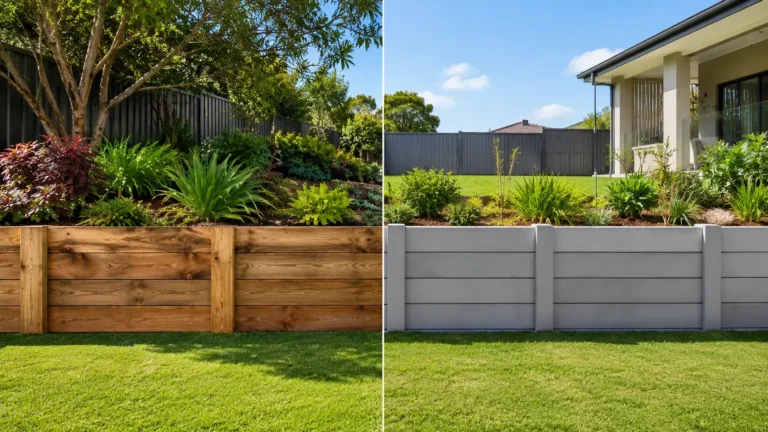
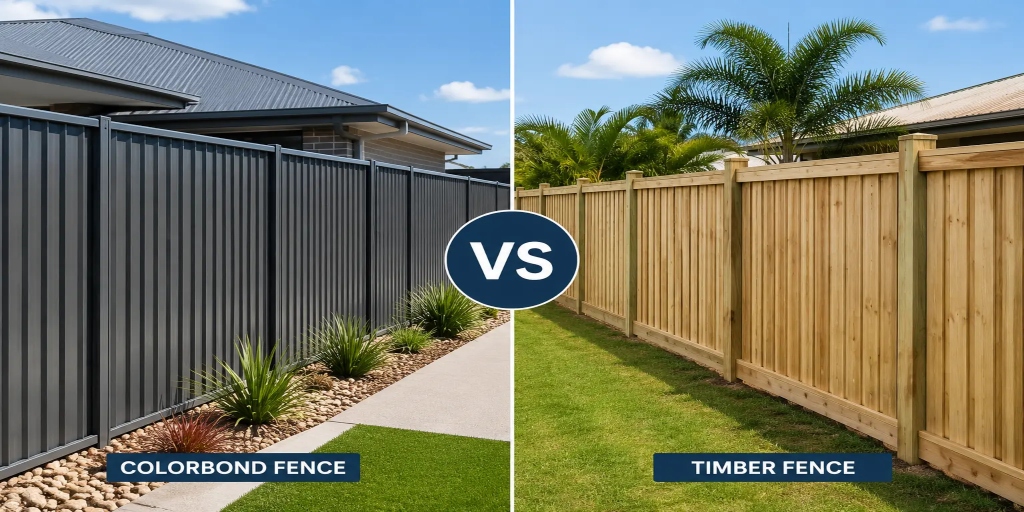
Selecting the best Queensland fence isn’t just about aesthetics — it’s withstanding extreme UV, summer storms, salt air and Queensland’s infamous termites. This guide will break down how a Colorbond fence compares to timber on cost, longevity, maintenance and street appeal so you can make an informed decision about the right option for your block and budget & local weather conditions.
In the end, you’ll have clarity on which fence is the long-term wise investment for your home.
Why the QLD Climate Changes the Fencing Equation
Fencing decisions that might seem logical in cooler southern states do not always stack up in Queensland. Hostile conditions of blistering sun and high humidity, abrupt torrential rains and coastal saltwater can be brutal on the wrong materials.
The big three QLD threats
- Termites. Queensland is among the most termite-prone areas in the Australia. Timber that is not treated or maintained is an open invitation.
- UV and heat. The sun relentlessly fades, warps and dries out materials over time.
- Storms and moisture. Timber rots and low-quality steel tends to rust quickly when heavy rain and humidity arrives in season.
This is exactly why so many Queensland homeowners now compare a Colorbond fence against traditional timber before committing — the climate rewards materials built to cope with it.
Colorbond Fencing: The Lowdown
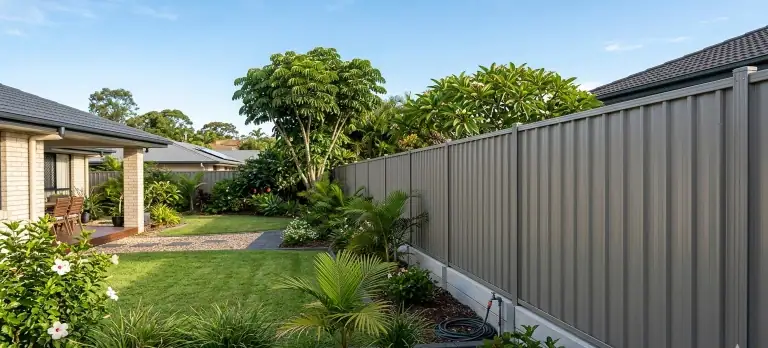
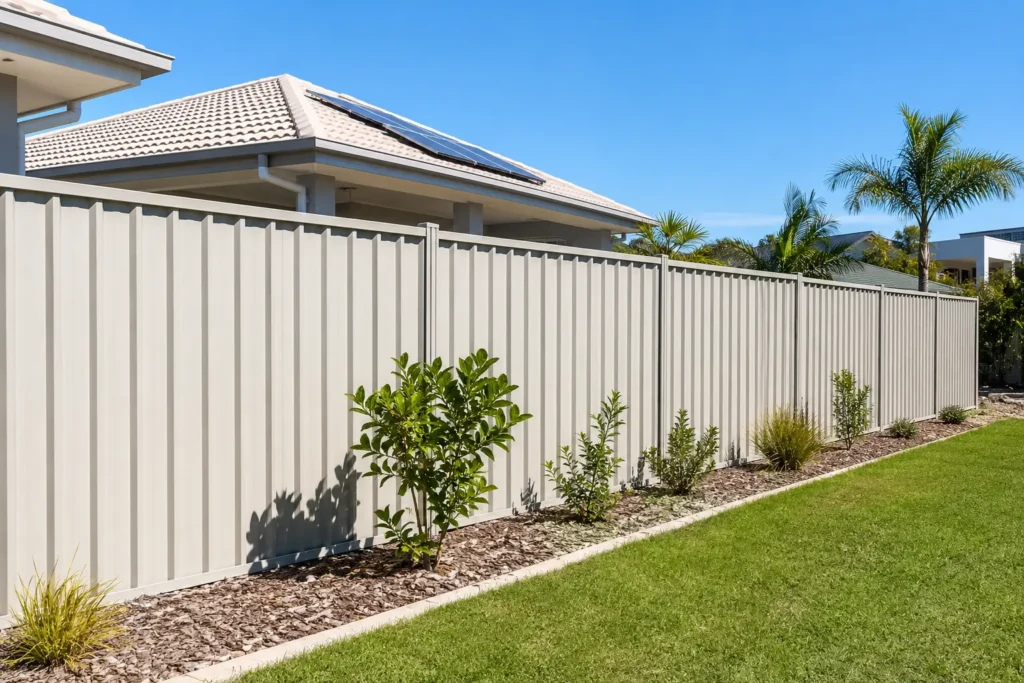
Colorbond is pre-painted steel specifically designed for Australian conditions. It is available in a lot of various colours and is one amongst the most favorite fencings option across QLD suburbs.
Pros of a Colorbond fence
- Low maintenance. No painting, oiling or staining – an occasional hose-down is usually enough.
- Termite-proof. Steel gives termites nothing to feed on, a major advantage in QLD.
- Durable. Resists warping, rotting and chipping, and handles UV well without fading quickly.
- Privacy and noise. Panels sit flush with no gaps, blocking sightlines and dampening road noise.
- Storm resistance. When properly installed with the right posts and footings, it stands up to strong winds.
Cons of a Colorbond fence
- Higher upfront cost than basic timber in many cases.
- Dents can occur from heavy impacts (think reversing trailers or fallen branches).
- Heat retention — darker colours can get warm to the touch in full summer sun.
- Less “natural” look if you’re after a classic timber aesthetic.
Timber Fencing: The Lowdown
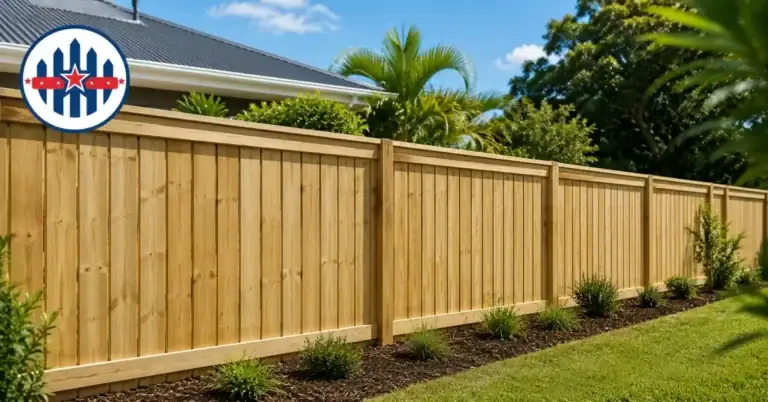
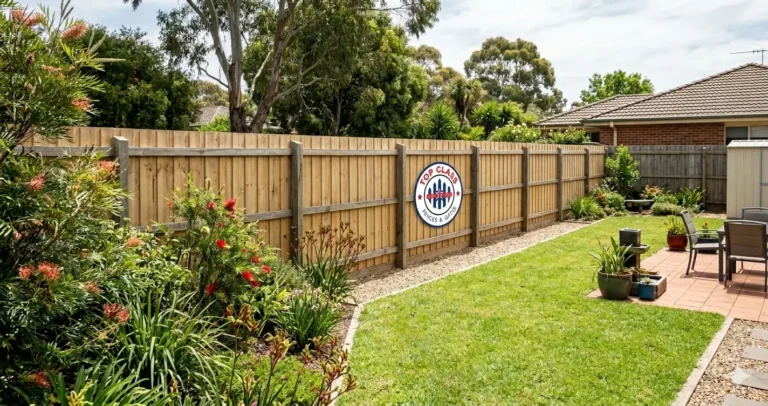
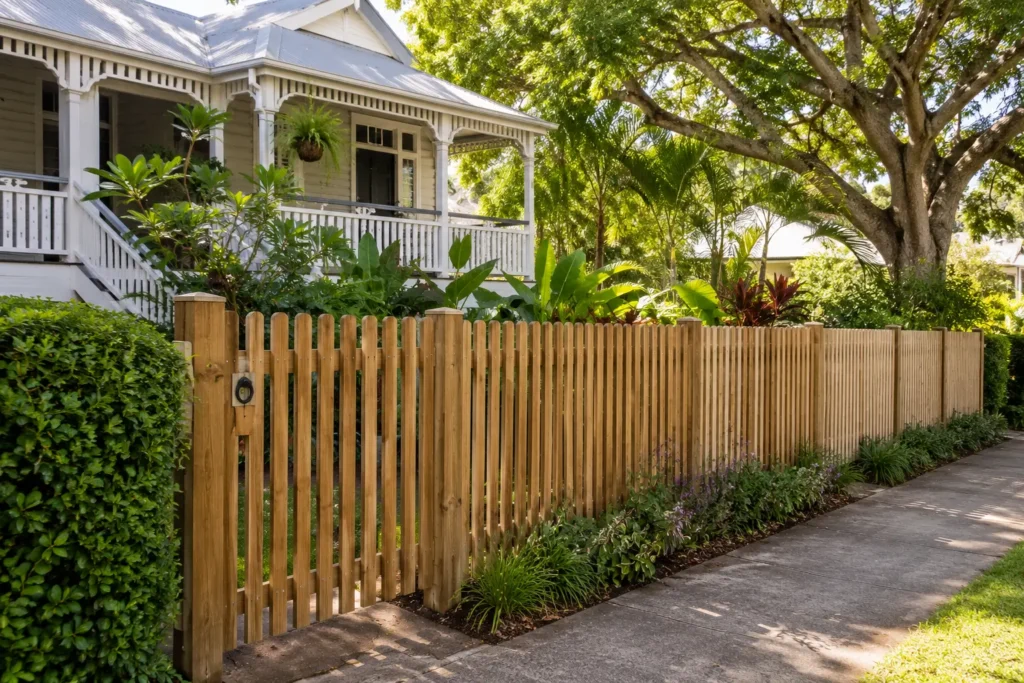
Timber remains a favourite for its warm, natural appearance and the way it complements traditional Queenslander-style homes and leafy gardens.
Pros of a timber fence
- Classic looks. Hard to beat for natural charm and character.
- Lower entry cost for standard hardwood or treated pine palings.
- Customisable. Easy to cut, extend, stain or paint to match your home.
- Repairable. Damaged palings can be swapped out individually.
Cons of a timber fence
- Termite risk. Even treated timber needs monitoring in QLD’s high-activity zones.
- Ongoing maintenance. Staining or oiling every few years to prevent rot, splitting and greying.
- Weathering. Humidity, rain and sun cause warping, cupping and fading over time.
- Shorter lifespan than steel if maintenance is neglected.
Cost Comparison: Upfront vs Long-Term
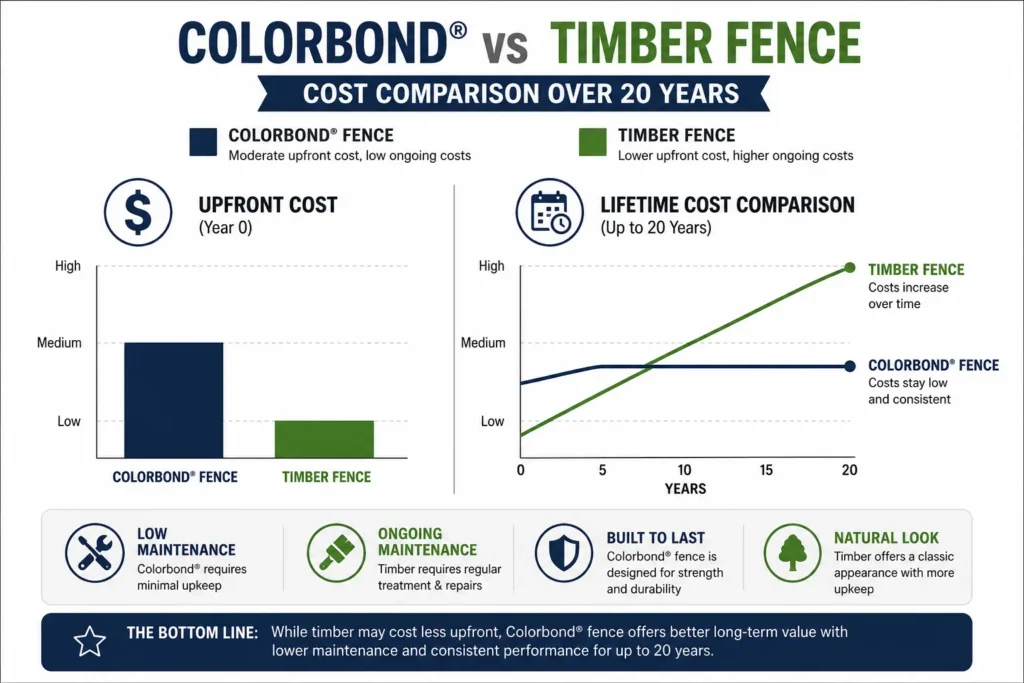
It’s tempting to judge fencing on the sticker price alone, but the smarter comparison is total cost over the fence’s lifetime.
Upfront costs
Timber often wins on initial outlay, particularly with treated pine. Hardwood timber narrows the gap, and a quality Colorbond fence typically sits at a moderate premium over basic timber.
Long-term value
Here the picture flips. Timber’s recurring costs — stain, oil, replacement palings and the occasional full rebuild — add up over the years. A Colorbond fence has minimal ongoing costs, so over a 15–20 year horizon it frequently works out cheaper despite the higher start price. For QLD homeowners staying put long-term, that lifetime maths matters.
Maintenance and Lifespan in Queensland Conditions
If you’d rather spend weekends at the beach than maintaining your boundary, this section is decisive.
Maintenance effort
- Colorbond: Hose down a couple of times a year. That’s essentially it.
- Timber: Re-stain or re-oil every 2–4 years, check for rot and termite activity, and replace damaged boards as needed.
Realistic lifespan
A well-installed Colorbond fence commonly lasts 20+ years in QLD with little fuss. Timber can also last decades, but only with diligent upkeep — and in humid, termite-heavy areas, neglected timber can deteriorate noticeably faster.
Tips and Checklist Before You Decide
Run through this quick checklist to match the right fence to your situation:
- Assess termite risk. If your area is high-activity, steel removes a major worry.
- Be honest about maintenance. Will you actually re-stain timber on schedule? If not, lean Colorbond.
- Think about your timeframe. Staying long-term favours Colorbond’s lifetime value; short-term may favour timber’s lower upfront cost.
- Check council and BAL requirements. Some QLD councils and bushfire-prone zones have rules on materials and heights.
- Consider your home’s style. Heritage Queenslanders often suit timber; modern builds often suit Colorbond.
- Factor in slope and soil. Sloped or reactive-soil blocks need the right posts and footings either way.
- Match it with gates and accessories. Plan gates, posts and capping early so everything is consistent.
- Get a written quote that includes posts, footings, removal of the old fence and labour — not just panels.
Frequently Asked Questions
Is a Colorbond fence worth the extra money in QLD?
For most homeowners, yes. The low maintenance, termite resistance and 20+ year lifespan usually justify the higher upfront cost — especially in QLD’s humid, termite-prone climate where timber demands more upkeep.
Does Colorbond get too hot in the Queensland sun?
Darker colours can warm up in direct summer sun, but the fence radiates that heat outward rather than into your home. Choosing a lighter colour reduces heat retention if it’s a concern for you.
How long does a timber fence last in Queensland?
With regular staining, sealing and termite monitoring, a quality hardwood timber fence can last 15–20 years or more. Without maintenance, humidity and pests can shorten that significantly.
Can I mix timber and Colorbond?
Absolutely. Many QLD homeowners use Colorbond for side and rear boundaries (privacy and durability) and timber features at the front for street appeal. It’s a popular way to balance cost, looks and performance.
The Verdict: Which Fence Wins for QLD?
There’s no single winner for every block — but for most Queensland homeowners, a Colorbond fence offers the best balance of durability, low maintenance and long-term value in a tough climate. Timber still shines where natural character and a lower upfront cost matter most, and where you’re happy to commit to regular upkeep.
The best choice comes down to your budget, your home’s style and how much maintenance you’re willing to take on. Explore your options across our colorbond range and timber range, and reach out for a tailored quote so we can recommend the right fit for your property and postcode. Get in touch today to lock in a fence built for Queensland conditions.
Related guides
Leaning towards Colorbond? Read our Colorbond fence cost guide and 10 things to know about Colorbond fencing.