TLDR — Quick Summary
Choosing a timber fence style comes down to three things: privacy needs, budget, and street appeal. Standard paling fences suit most suburban backyards and cost the least. Lapped and capped or good neighbour fences add privacy and a more finished look for a moderate price increase. Picket and post-and-rail styles favour kerb appeal over privacy and suit period homes or acreages. Hardwood costs more but lasts 25+ years with almost no maintenance; treated pine costs less but needs re-coating every 2–3 years.
Below, we cover 13 styles, their real-world costs per metre, council approval rules in Queensland and across Australia, maintenance schedules, and how to choose between hardwood and treated pine for your specific climate and budget.
Why Timber Fencing Is Still Australia’s Most Popular Choice
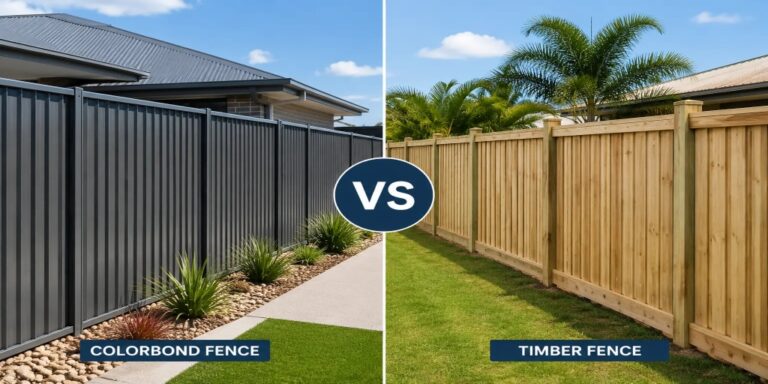
Timber remains the most installed residential fencing material in Australia, and for good reason. It’s the only fencing material that can be styled, painted, stained, or left natural to suit virtually any architectural era — from Queenslanders to modern coastal builds. It’s also significantly easier to repair in sections than Colorbond or aluminium, which generally need a full panel replaced if damaged.
That said, timber isn’t right for every situation. If your property needs a more secure, low-maintenance option, our security fencing range is worth comparing before you commit to a style.
This guide focuses specifically on style selection — once you know which look suits your home, our timber fencing cost guide and best timber for fencing article can help you finalise materials and budget.
The 13 Most Popular Timber Fence Styles in Australia
1. Standard Paling Fence (Featherboard)
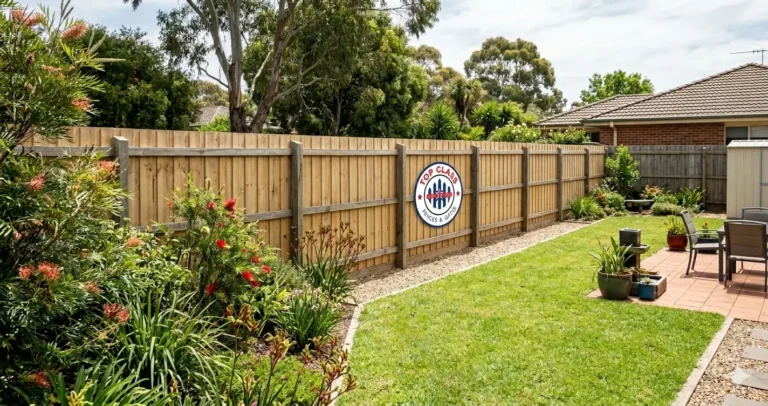
The featherboard or standard paling fence is the backbone of Australian suburbia — vertical pine palings nailed directly to horizontal rails, butted edge to edge with minimal gaps.
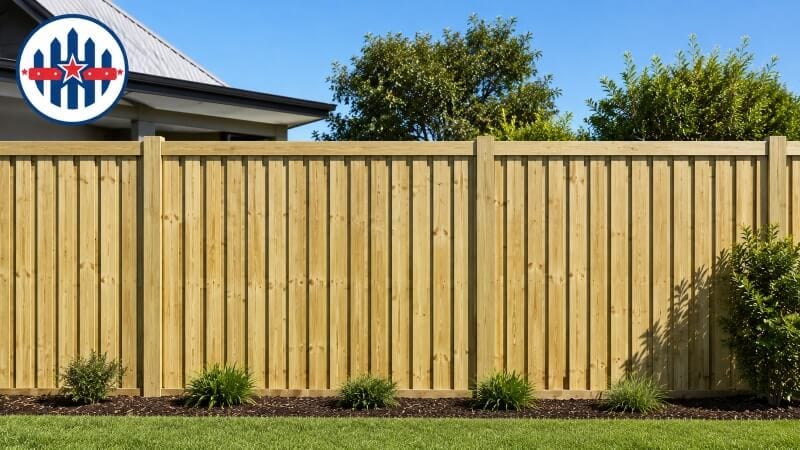
Why people choose it: It’s the cheapest timber fence style per linear metre, and individual palings are simple to replace if damaged, which matters if you have kids playing backyard cricket or a dog that likes to test boundaries.
Best for: Budget-conscious backyards, rental properties, side and rear boundaries where street appeal matters less.
Watch out for: Gaps can open up as pine palings dry out and shrink over a hot Australian summer, slightly reducing privacy over time.
2. Lapped and Capped Fence
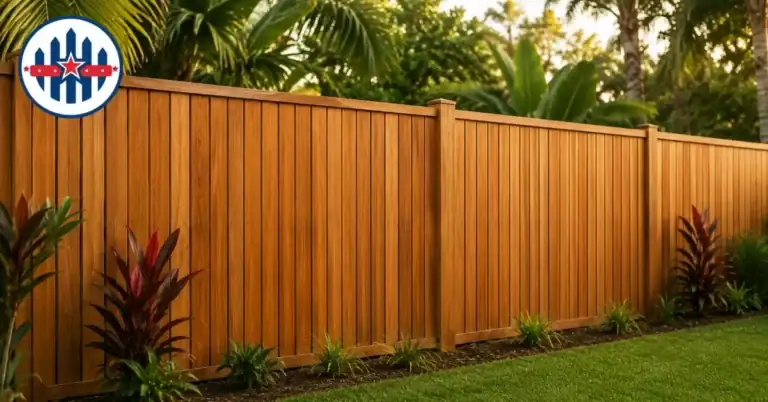
This premium step-up style overlaps each paling by roughly 20–30mm and finishes the top with a capping rail, which protects the end grain of the palings from water and significantly extends their life.
Why people choose it: Better privacy (no gaps even as timber moves), a tidier finished look from both sides of the fence top, and longer paling lifespan thanks to the cap protecting exposed end grain.
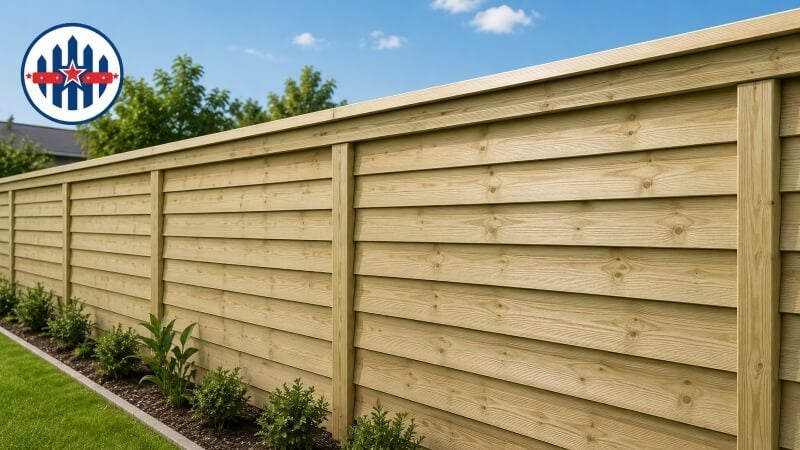
Best for: Front fences, pool surrounds where privacy and presentation both matter, and homes wanting a more premium street presence.
3. Good Neighbour Fence (Shadowbox)
Also called shadowbox fencing, this style alternates palings on either side of a central rail rather than overlapping them on one side. The result: both neighbours see a near-identical “good” face of the fence, rather than one side getting the rails and posts.
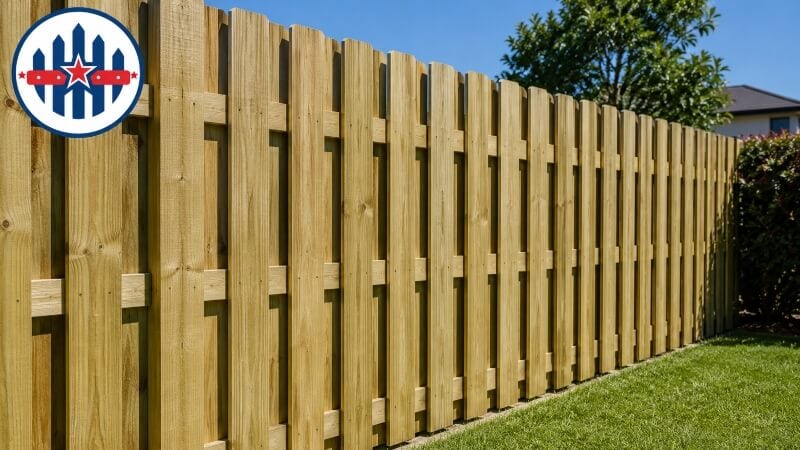
Why people choose it: Fair appearance for both properties — ideal for shared boundary fences where cost and appearance need to be split evenly.
Trade-off: Viewed at an angle, small sightlines can open up between palings. This is fixed by tightening paling spacing and using a higher paling count per metre, which does add cost.
4. Traditional Colonial Picket Fence
Pickets are narrower, often pointed or rounded at the top, spaced with visible gaps rather than built solid for privacy. This is the heritage fence style most associated with Queenslanders and Federation-era homes.
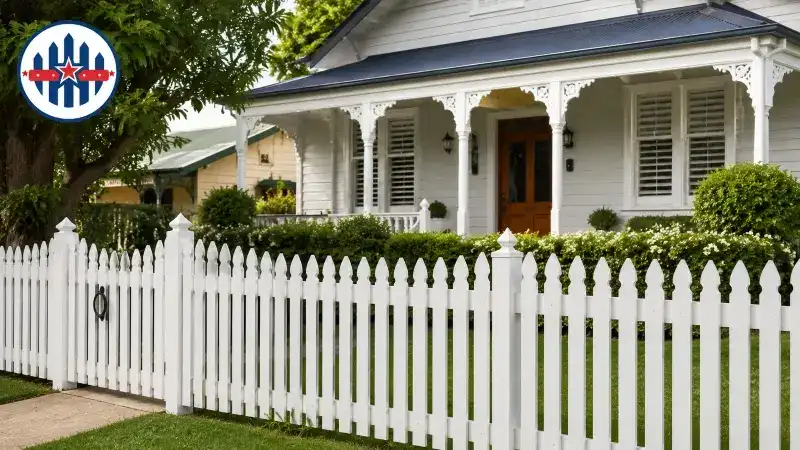
Why people choose it: Unmatched kerb appeal and heritage character; pairs beautifully with painted weatherboard homes; easy to paint or colour-match.
Best for: Front fences on period homes, character suburbs, and anywhere street presentation outweighs privacy.
Not ideal for: Pool compliance fencing (gaps generally fail pool fence regulations) or full backyard privacy.
5. Rural / Post and Log Fencing
Built from rough-sawn pine logs or split timber posts and rails, this is the fence style you see along country highways and acreage boundaries.
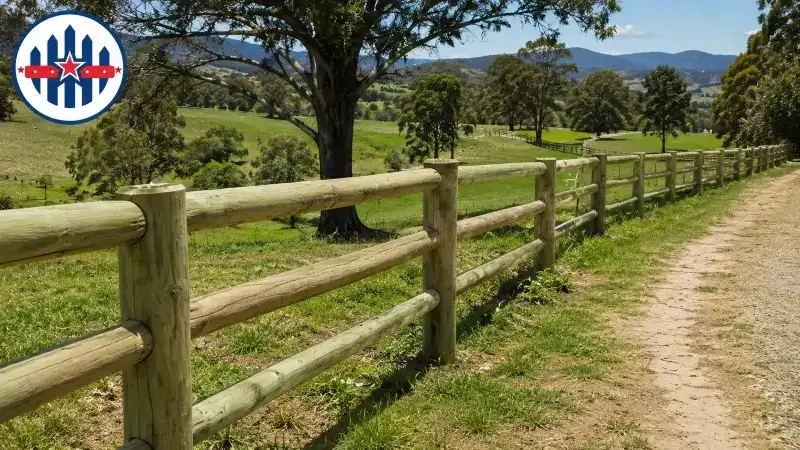
Why people choose it: Cost-effective over long distances, minimal maintenance, and strong enough to handle livestock containment or simple boundary marking on large blocks.
Best for: Acreage properties, rural boundaries, and anywhere a fence needs to span hundreds of metres affordably.
6. Post and Rail Fencing
A cleaner, more refined cousin of rural fencing — typically 2 or 3 horizontal rails between evenly spaced posts, with no palings at all.
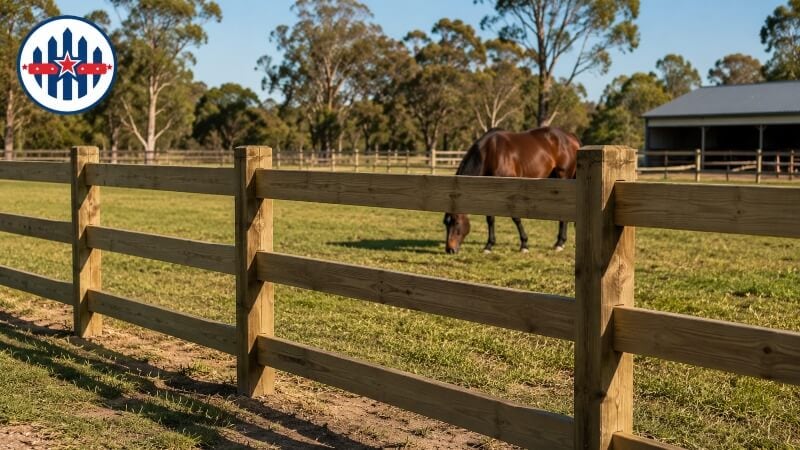
Why people choose it: Strong containment for horses and livestock without the safety risks of wire fencing; gives acreage properties an upmarket, equestrian-style look.
Best for: Horse paddocks, acreage entry statements, and properties wanting an open, rural aesthetic rather than full privacy.
7. Horizontal Slat (Battened) Fence
A contemporary style using horizontal timber boards or battens fixed to vertical posts, often with deliberate gaps for a screen-like effect.
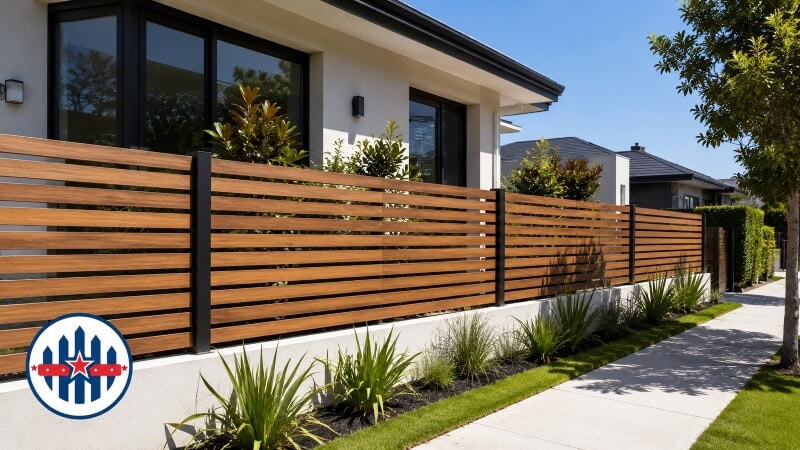
Why people choose it: Modern architectural appeal; works particularly well with render, brick, or black-framed homes; allows airflow while still providing visual screening.
Best for: Contemporary builds, courtyards, and feature front fences where the fence itself is part of the home’s design statement.
Note: Horizontal designs put more load on posts over time, so post spacing and footing depth matter more than with vertical paling fences — this is one to get right at the design stage.
8. Vertical Slat / Privacy Screen Fence
Similar to horizontal slats but oriented vertically, often with consistent gaps for a modern “screened” look rather than the tight seal of a standard paling fence.
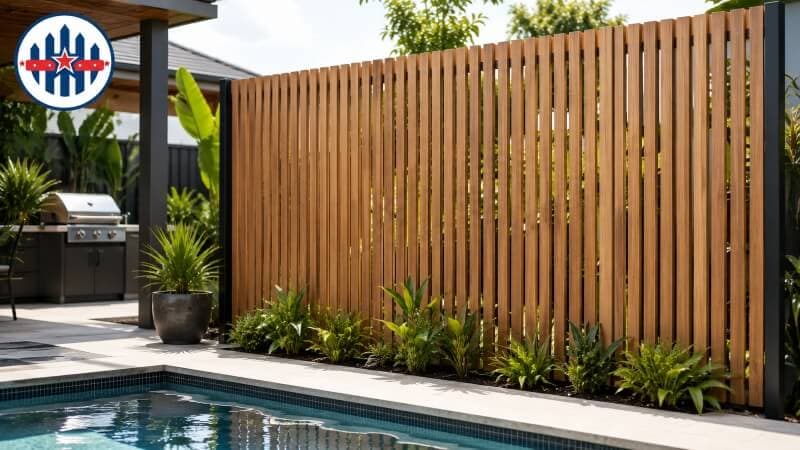
Why people choose it: Balances privacy with airflow and natural light — popular for pool areas and alfresco zones where a solid fence feels too heavy.
Best for: Pool surrounds (subject to compliance — see below), outdoor entertaining areas, modern landscaping projects.
9. Picket and Lattice Combination Fence
Combines a lower solid or picket section with an upper lattice panel, often used where full privacy isn’t required but some height and screening is desired.
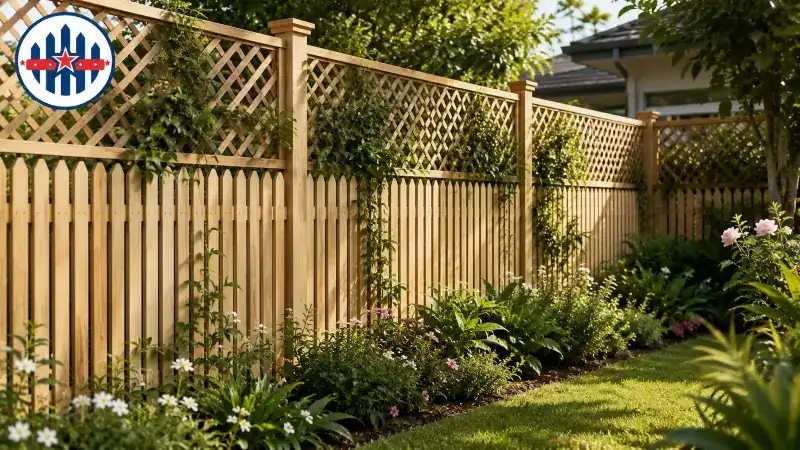
Why people choose it: Lets light and breeze through the top section while still defining the boundary; popular for cottage gardens and softening a harder fence line with climbing plants.
Best for: Garden boundaries, side fences, and anywhere a softer aesthetic is preferred over a solid wall of timber.
10. Board-on-Board Fence
A variation on lapped and capped where wider boards overlap generously (sometimes 50% or more), creating a thicker, more substantial-looking fence from both sides.
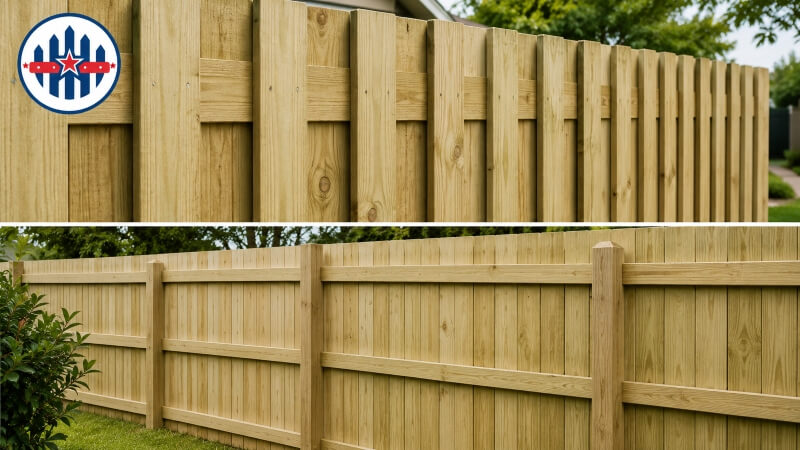
Why people choose it: Excellent privacy and noise dampening; looks equally finished from both the inside and outside of the property — useful for fences that face a shared driveway or laneway.
11. Capped Picket Fence
A hybrid of the colonial picket and lapped-and-capped styles — pointed or flat-top pickets finished with a horizontal capping rail for a slightly more refined, protected version of the classic picket look.
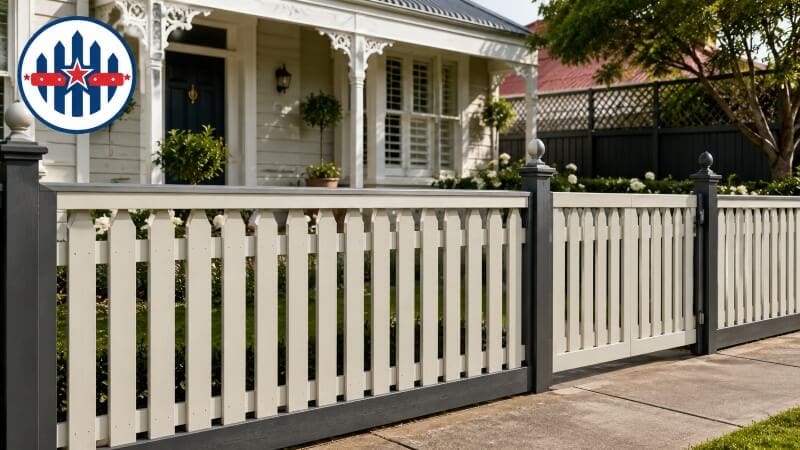
Why people choose it: Retains heritage charm while protecting paling end grain from water damage, extending the fence’s lifespan compared to an uncapped picket fence.
12. Combination Timber and Colorbond Fence
Uses Colorbond posts and structural rails with timber infill panels (or vice versa), blending the low-maintenance strength of steel framing with the natural look of timber.
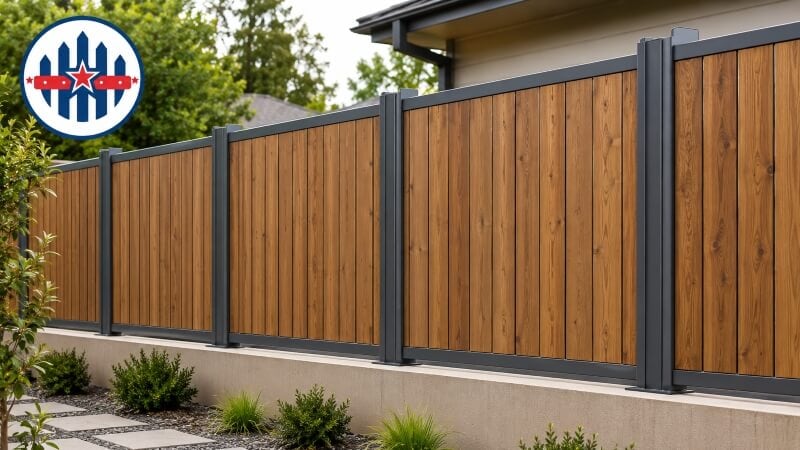
Why people choose it: Steel posts won’t rot, twist, or attract termites, while timber infill keeps the warm, natural street appeal — a popular middle-ground choice in newer estates.
13. Acoustic / Noise-Reduction Timber Fence
A denser construction style — typically thicker hardwood palings with minimal or zero gaps and sometimes a layered build — designed specifically to reduce traffic or neighbour noise transfer.
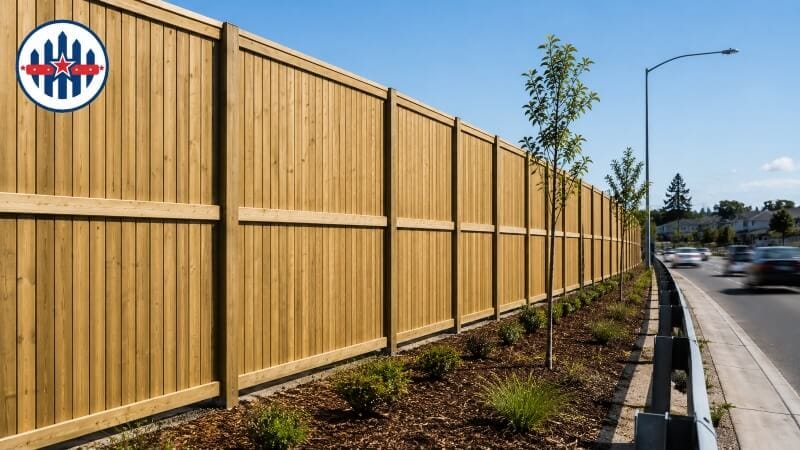
Why people choose it: Properties backing onto busy roads or rail corridors benefit from the extra mass and sealed construction, which measurably reduces noise compared to a standard paling fence.
Timber Fence Styles Compared: Cost, Privacy & Maintenance
| Style | Privacy Level | Relative Cost | Maintenance | Best Use Case |
|---|---|---|---|---|
| Standard Paling | High | $ | Low–Medium | General backyard boundary |
| Lapped & Capped | Very High | $$ | Low | Front fence, pool surrounds |
| Good Neighbour (Shadowbox) | Medium–High | $$ | Medium | Shared boundary fences |
| Colonial Picket | Low | $$ | Medium | Heritage homes, front fences |
| Rural / Log | Low | $ | Very Low | Acreage, long boundaries |
| Post and Rail | None–Low | $ | Very Low | Horse paddocks, acreage |
| Horizontal Slat | Medium | $$$ | Medium | Modern/contemporary homes |
| Vertical Slat Screen | Medium | $$$ | Medium | Pool areas, alfresco zones |
| Picket and Lattice | Low–Medium | $$ | Medium | Garden boundaries |
| Board-on-Board | Very High | $$$ | Low | Shared driveways, noise zones |
| Capped Picket | Low–Medium | $$ | Low–Medium | Period home front fences |
| Timber/Colorbond Combo | High | $$ | Very Low | Modern estates |
| Acoustic Fence | Very High | $$$$ | Low | Road/rail-adjacent properties |
Cost ratings are relative ($ = most affordable, $$$$ = premium); actual pricing depends on timber species, fence height, and site conditions. Contact us for Pricing.
Hardwood vs Treated Pine: Which Material Should You Choose?
This decision matters more than the style itself, because it determines how long your fence lasts and how much upkeep it needs.
Hardwood Palings, Posts & Rails
Pros:
- Naturally dense and durable — typically 25–40+ years lifespan with minimal care
- Excellent resistance to termites and rot without heavy chemical treatment
- Premium, darker appearance that many buyers associate with quality
- Performs well in all Australian climates, including humid and coastal zones
Cons:
- Higher upfront cost than treated pine
- Heavier, so installation can take longer
- Limited availability of some species in certain regions
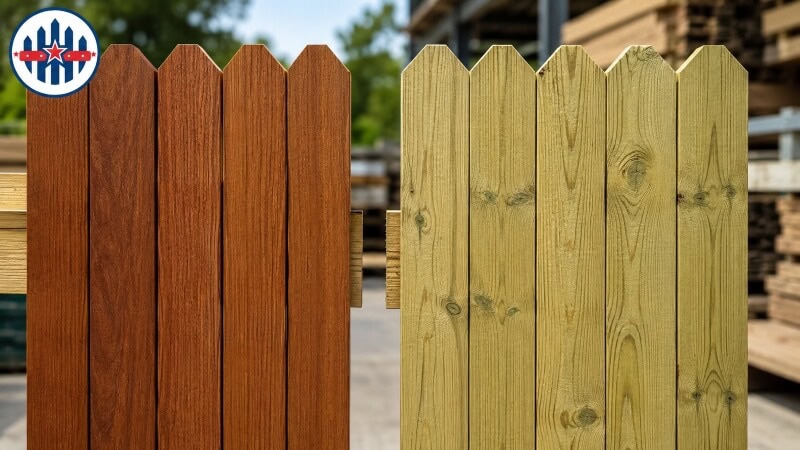
Treated Pine Palings, Posts & Rails
Pros:
- More affordable upfront — the most cost-effective fencing material in Australia
- Lightweight and faster to install
- Widely available with consistent sizing nationwide
- H3-treated palings/rails and H4-treated posts protect against rot, pests, and decay
Cons:
- Needs re-staining or re-oiling every 2–3 years to maintain appearance and weather resistance
- Shorter typical lifespan than hardwood (though H4 posts last well when properly installed)
- Can warp or cup slightly if not sealed promptly after installation
Quick Decision Guide
- Want the lowest upfront cost and don’t mind re-coating every couple of years? → Treated pine
- Want a “install and forget” fence that lasts decades? → Hardwood
- Building in a coastal, humid, or termite-prone area? → Hardwood is generally the safer long-term choice
- Fencing a large acreage boundary on a budget? → Treated pine or rural log fencing
How Much Does a Timber Fence Cost in Australia?
Exact pricing varies by state, timber species, and site access, but as a general guide for a standard 1.8m fence:
- Standard paling (treated pine): Most affordable option, typically the entry point for timber fencing
- Lapped and capped: Moderate increase over standard paling due to additional timber and labour
- Hardwood paling fences: Noticeably higher than pine due to material cost, though labour is similar
- Post and rail / rural fencing: Cost-effective per metre over long distances due to fewer components
- Custom styles (horizontal slat, board-on-board, acoustic): Premium pricing due to additional materials and installation time
For a precise, current quote based on your property’s dimensions and chosen style, request a free quote from our team — pricing fluctuates with timber market conditions, so an up-to-date quote is always more accurate than a general guide.
Do I Need Council Approval for a Timber Fence in Australia?
This is one of the most common questions homeowners ask before starting a fencing project. Rules vary by state and council, but general principles apply nationwide:
- Fences under 2 metres in most residential zones typically don’t require a building permit, provided they meet local height and boundary setback rules.
- Front fences are often restricted to a lower maximum height (commonly around 1–1.2m in many councils) to maintain street sightlines, with some allowance for solid sections versus open/lattice sections.
- Pool fences must comply with Australian Standard AS1926.1, regardless of which timber style you choose — gaps, self-closing gate mechanisms, and climbability rules apply specifically here.
- Heritage overlays or estate covenants can restrict fence style, colour, or material even if council doesn’t require a standard permit.
Because rules differ between councils and states, always confirm requirements with your local council before installation — particularly for pool fencing, where non-compliance can mean costly rework.
Maintenance Guide: How to Keep Your Timber Fence Looking New
| Task | Treated Pine | Hardwood |
|---|---|---|
| Re-oil / re-stain | Every 2–3 years | Every 4–6 years (optional, mainly cosmetic) |
| Check for loose palings/nails | Annually | Annually |
| Inspect posts at ground level | Every 1–2 years | Every 2–3 years |
| Clear vegetation/mulch from base | Ongoing | Ongoing |
| Pressure wash (light setting) | Yearly, before re-coating | As needed |
Pro tip: Keep garden beds and mulch pulled back at least 50–75mm from fence palings and posts. Constant moisture contact at ground level is the single biggest cause of premature rot in both treated pine and hardwood fencing.
Frequently Asked Questions
Q.1 What is the most popular timber fence style in Australia?
Ans. The standard paling (featherboard) fence is the most common timber fence style in Australia, mainly because it’s the most affordable option and individual palings are easy to replace.
Q2. Which timber fence style offers the best privacy?
Ans. Lapped and capped fencing and board-on-board fencing offer the highest privacy levels, since the overlapping palings eliminate sightline gaps even as timber naturally expands and contracts with weather.
Q3. Is hardwood or treated pine better for fencing?
Ans. Hardwood lasts longer (often 25+ years) with minimal maintenance and suits humid or termite-prone areas, while treated pine costs less upfront but needs re-coating every 2–3 years. The right choice depends on your budget and how much maintenance you’re willing to do.
Q4. How long does a treated pine fence last?
Ans. A well-maintained treated pine fence with H4-treated posts typically lasts 15–20+ years, provided it’s re-coated regularly and kept clear of constant moisture at ground level.
Q5. Do I need council approval to build a timber fence?
Ans. Fences under roughly 2 metres usually don’t require a permit in most Australian residential zones, but front fence height limits, pool fencing standards, and heritage overlays can apply. Always check with your local council before building.
Q6. What’s the difference between a good neighbour fence and a lapped and capped fence?
Ans. A good neighbour (shadowbox) fence alternates palings on either side of a central rail so both neighbours see an even finish, while a lapped and capped fence overlaps palings on one side only, giving one property the finished face and the other the rail side.
Q7. Can I use timber fencing around a pool?
Ans. Yes, but the fence must comply with Australian Standard AS1926.1, which restricts paling gaps, requires non-climbable surfaces, and mandates a self-closing, self-latching gate. Picket-style fences with wide gaps generally don’t meet this standard without modification. Browse compliant pool fence panels and posts in our range.
Q8. How far apart should fence posts be for a timber fence?
Ans. Standard residential timber fence posts are typically spaced at consistent intervals matched to your rail lengths (commonly around 2.4–3m), though horizontal slat designs and taller fences may require closer spacing for structural stability.
Choosing the Right Style for Your Property
If you’re still deciding, work through it in this order:
- Define your priority — privacy, kerb appeal, budget, or low maintenance.
- Check compliance requirements — pool fencing, front fence height limits, and any heritage or estate covenants.
- Match material to climate — hardwood for coastal/humid/termite-prone areas, treated pine for most other conditions on a budget.
- Get a site-specific quote — ground conditions, access, and total linear metres all affect final pricing more than the style choice alone.
A fence is a 15–30 year investment in your property, so it’s worth getting the style and material decision right from the start rather than retrofitting later.
Get Expert Advice and a Free Quote
Choosing between 13 fence styles and two material options can feel overwhelming — but you don’t have to figure it out alone. Our team has helped homeowners and tradies across Australia select, supply, and install the right timber fencing solution for their property, budget, and local council requirements.
Ready to get started? Browse our full range of timber fencing supplies, Colorbond fencing, gates, and fencing accessories — or get in touch with our team and one of our fencing specialists will help you choose the right style and materials for your project.