Whether you’re building a new fence from scratch, replacing an ageing boundary, or simply weighing up your options, timber remains the most popular fencing material in South East Queensland — and it’s not hard to see why.
Wooden fences offer a rare combination of affordability, natural beauty, strength, versatility, and DIY-friendliness that no other material quite matches. In this guide, we go beyond the basics to explain exactly why wood fences make sense for Brisbane and Queensland homeowners, what you need to know before buying, how timber stacks up against other fencing options, and how to get the most out of your investment.
Table of Contents
- Why Wood Fencing Is Still #1 in Queensland
- 10 Key Benefits of Wood Fences
- Wood Fence vs Other Fencing Materials: How Does Timber Compare?
- Choosing the Right Timber for Your Fence in Queensland’s Climate
- Essential Components of a Wood Fence
- Buyer’s Checklist: What to Consider Before You Buy
- How to Maintain a Timber Fence in Brisbane’s Weather
- Frequently Asked Questions
- Shop Timber Fencing Supplies at Top Class Fences
1. Why Wood Fencing Is Still #1 in Queensland
Queensland’s fencing market offers plenty of choices — COLORBOND steel, aluminium, PVC, and pool glass all have their place. But year after year, timber fencing continues to dominate. Walk down almost any Brisbane street, from Paddington to Redland Bay, and you’ll see why: wooden fences simply look at home in Australian residential settings.
There are practical reasons too. Queensland’s lot sizes mean fences often run for tens or even hundreds of metres. Timber keeps material costs manageable. The state’s subtropical climate — hot, humid summers and mild winters — suits treated pine and hardwood timbers that have been used successfully in Queensland for generations. And for the large proportion of Queensland homeowners who love a weekend project, timber is the most DIY-friendly material on the market.
2. The 10 Key Benefits of Wood Fences
Benefit 1: Lower Upfront Cost Than Most Alternatives
When it comes to fencing a standard Queensland backyard, timber is hard to beat on price. Timber palings — especially treated pine — are among the most affordable fencing materials available per lineal metre. Because timber requires minimal processing compared to manufactured materials like steel or aluminium, you pay less for the raw material, and labour costs are generally lower too since most Brisbane fencing contractors are highly experienced with timber.
For budget-conscious homeowners and investors fencing large blocks, the savings over COLORBOND or aluminium alternatives can be substantial.
Benefit 2: Cost-Effective Repairs Over the Long Term
One of the most overlooked benefits of a timber fence is how easy and cheap individual repairs are. If a single paling is damaged — by a falling branch, a wayward ball, or simple age — you can replace just that paling for a few dollars without disturbing the rest of the fence.
Compare this to COLORBOND, where matching an older colour or replacing a damaged panel often means replacing entire sections. Or glass pool fencing, where a cracked panel can be a serious and expensive fix. With timber, repair costs stay low throughout the fence’s lifetime.
Benefit 3: Versatile Styles to Suit Any Home
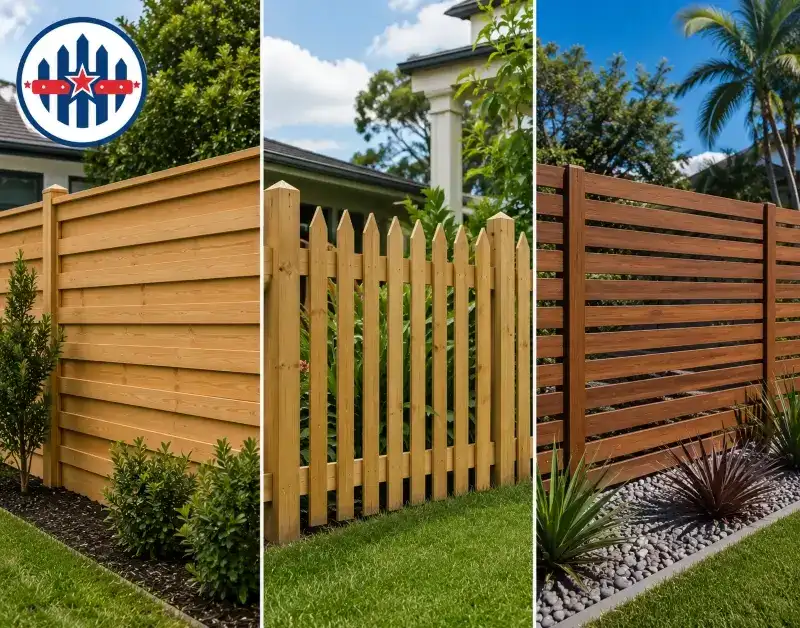
Timber fences aren’t one-size-fits-all. Whether your property is a classic Queenslander, a modern architectural build, or a family home on a suburban block, there’s a timber fence style to match:
- Lapped and capped: A classic Queensland style with overlapping palings and a capped top rail for a clean finish.
- Hit and miss / open paling: Alternating palings on both sides of the rail for airflow and a semi-private look.
- Closed paling (butted): Full privacy with palings placed edge to edge.
- Picket fence: Traditional and charming, perfect for front boundary fences on heritage or cottage-style homes.
- Horizontal slat: A contemporary look that suits modern architecture beautifully.
No other fencing material offers this range of style options at a comparable price point.
Benefit 4: Natural Beauty That Complements Queensland Landscaping
There’s something unmistakably appealing about natural timber in an outdoor setting. Unlike steel, aluminium, or PVC, wood has organic grain, texture, and warmth that ages gracefully and complements Queensland gardens, native plantings, and outdoor living spaces.
Timber fences can be left natural, oiled, stained, or painted — giving you complete control over the final look. A freshly painted white timber picket fence is as timeless as it gets. A rich hardwood fence, left to silver naturally, looks stunning against tropical Queensland greenery.
Benefit 5: Excellent Privacy and Security
A well-built close-paling timber fence provides genuine privacy for your outdoor living areas — something particularly valued in Brisbane’s suburban blocks, where homes can be quite close together. Fence heights of 1.8m to 2.1m are common and straightforward to achieve with timber construction.
For properties where security is a higher priority, timber fences can incorporate features like security-grade posts, solid construction, and lockable timber gates — providing a robust boundary without the harsh visual impact of steel security fencing. For properties that need the next level of security, you can also explore security fencing options to complement your timber boundary.
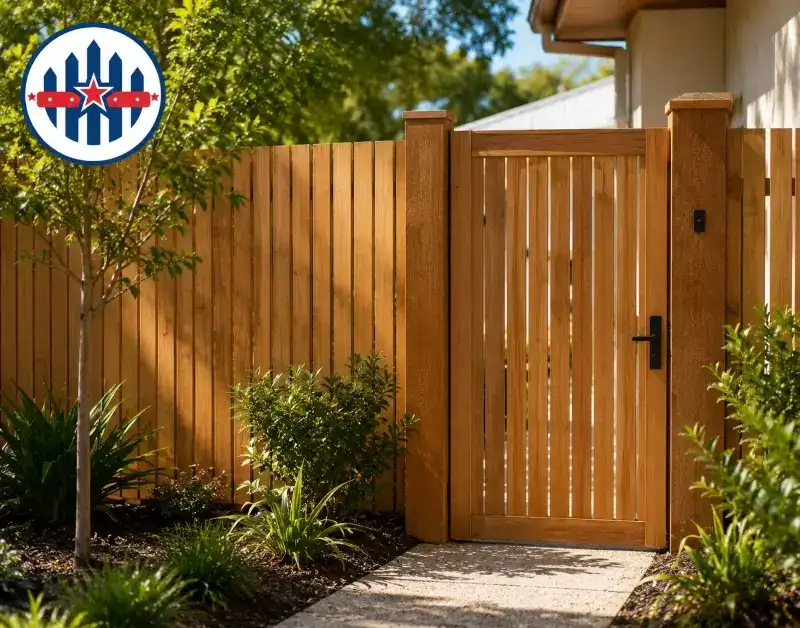
Benefit 6: DIY-Friendly and Accessible for Tradies
Timber is the most accessible fencing material for DIY projects. It requires common tools (saw, drill, hammer), is easy to cut and modify on-site, and doesn’t require specialised equipment or skills. For homeowners who enjoy weekend projects, building or repairing a timber fence is a very achievable job.
For those calling in a tradie, virtually every fencing contractor in Brisbane and Queensland is experienced with timber — meaning you have a wide choice of qualified fencers, and competitive pricing. This is less true of some specialty materials.
Benefit 7: Sustainable and Environmentally Friendly
When sourced from responsibly managed forests, timber is one of the most sustainable building materials available. Unlike steel or aluminium — which require significant energy to manufacture — timber is a natural, renewable resource that also sequesters carbon during the tree’s growth.
For eco-conscious Queensland homeowners, choosing certified sustainably sourced timber fencing is a meaningful way to reduce the environmental footprint of their property improvements. Look for timbers with FSC (Forest Stewardship Council) certification when purchasing.
Benefit 8: Adds Property Value and Kerb Appeal
A quality timber fence makes an immediate positive impression. Whether you’re preparing to sell or simply investing in your property’s long-term value, a well-built and well-maintained fence contributes meaningfully to kerb appeal and perceived value.
Premium hardwood fences — built using quality hardwood posts and hardwood rails — signal craftsmanship and durability to prospective buyers and real estate appraisers alike. In competitive Brisbane markets, presentation matters.
Benefit 9: Adaptability to Queensland’s Varied Terrain
Queensland properties often come with sloped, uneven, or rocky ground. Timber fences are uniquely adaptable to these conditions. Unlike prefabricated panel fences, timber fences can be “raked” or “stepped” to follow the contours of any terrain. Posts can be set at varying heights, and palings can be cut to accommodate virtually any slope.
This flexibility is a real practical advantage in Brisbane’s hilly suburbs like Paddington, The Gap, and Chapel Hill, or in outer suburban and rural Queensland properties where flat ground is anything but guaranteed.
Benefit 10: Works Beautifully With Retaining Walls and Landscaping
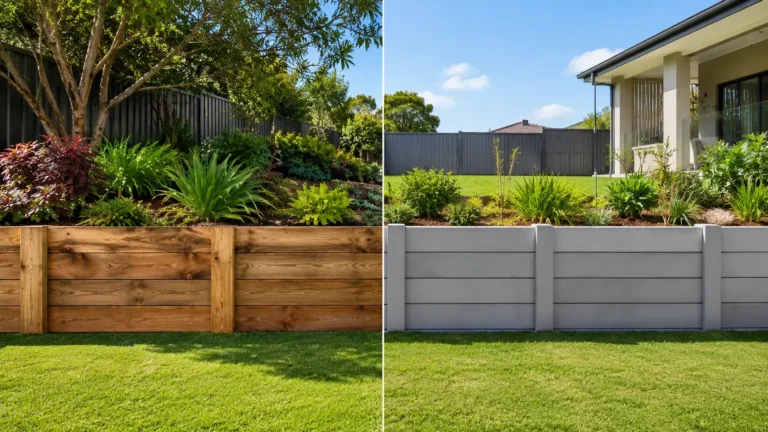
Timber fences and timber sleeper retaining walls are a natural pairing. On sloped Queensland blocks, it’s very common to see a retaining wall at the base of a fence — managing soil, level changes, and drainage, while the timber fence above provides privacy and boundary definition. The visual cohesion between timber sleepers and timber palings creates a polished, considered look that other fence materials can’t replicate as naturally.
3. Wood Fence vs Other Fencing Materials: How Does Timber Compare?
| Feature | Timber | COLORBOND Steel | Aluminium | PVC/Vinyl | Glass (Pool) |
|---|---|---|---|---|---|
| Upfront cost | ✅ Low–Medium | Medium–High | High | Medium | Very High |
| Repair cost | ✅ Very Low | Medium | Medium–High | Low–Medium | Very High |
| DIY-friendly | ✅ Yes | Limited | Limited | Yes | No |
| Style variety | ✅ Very High | Medium | Medium | Medium | Low |
| Natural look | ✅ Excellent | Poor | Poor | Poor | Good |
| Privacy | ✅ Excellent | ✅ Excellent | Moderate | Excellent | Poor |
| Durability (with maintenance) | Good | Very Good | Very Good | Good | Very Good |
| Sustainability | ✅ Good (certified) | Moderate | Moderate | Poor | Moderate |
| Adaptable to slopes | ✅ Excellent | Moderate | Moderate | Moderate | Poor |
The Bottom Line: Timber wins on cost, aesthetics, flexibility, and sustainability. COLORBOND is a strong competitor on durability and low-maintenance — but it lacks timber’s style versatility and natural appeal. If aesthetics, budget, and DIY accessibility matter to you, timber is the clear choice.
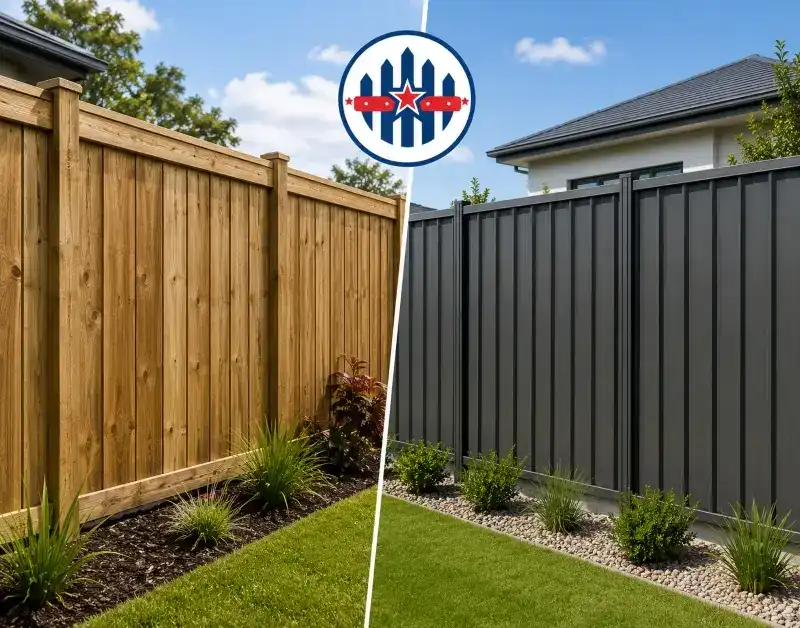
Not sure if timber is right for your application? For pool surrounds, explore our pool fencing range. For higher-security boundary fencing, see our security fencing. And for the classic Australian look with extra durability, browse our COLORBOND fencing options.
4. Choosing the Right Timber for Your Fence in Queensland’s Climate
Queensland’s subtropical climate — high humidity, heavy summer rainfall, UV intensity, and termite pressure — means timber selection matters more here than in cooler, drier parts of Australia. Here’s what you need to know:
Treated Pine (Softwood)
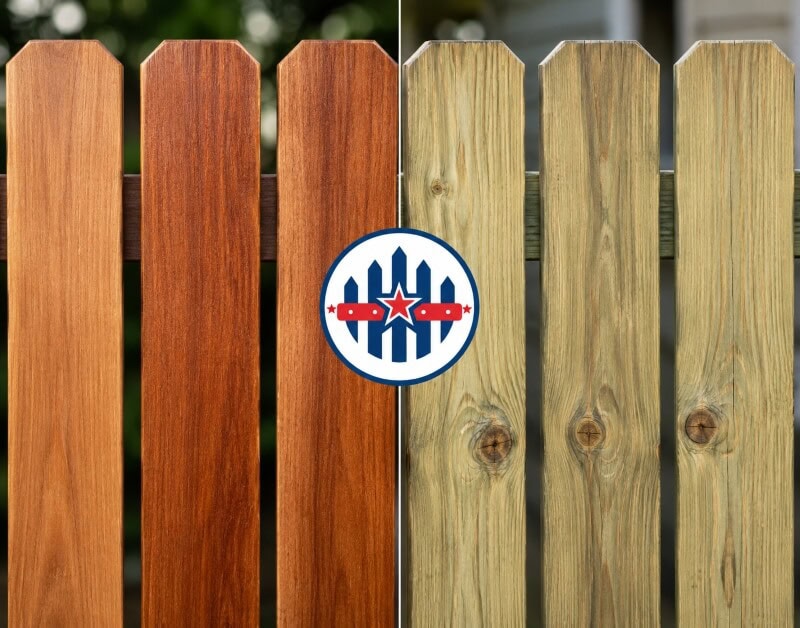
The most popular and cost-effective choice for Queensland fences. H4-treated pine (suitable for in-ground contact) is the standard for posts and any timber going into or near the ground. H3-treated pine is appropriate for above-ground applications like palings and rails. Treated pine should be painted or oiled to extend service life and maintain appearance.
- Best for: Budget fencing, standard residential boundaries, DIY projects
- Lifespan: 15–25+ years with proper treatment and maintenance
Hardwood (e.g., Spotted Gum, Ironbark, Tallowwood, Blackbutt)
Australian hardwoods are among the toughest, most durable timbers in the world — naturally resistant to rot, insects, and fire, and built for Queensland conditions. Hardwood fences command a premium but deliver exceptional longevity and a beautiful natural appearance that only improves with age.
- Best for: Premium fences, properties near bushland, maximising property value
- Lifespan: 25–40+ years with basic maintenance
A Note on Termite Risk in Queensland
Termite activity is significant across South East Queensland. When using timber fencing:
- Always use H4 or H5 treated posts for in-ground installation
- Consider stainless steel or galvanised post stirrups/brackets to keep timber off the ground
- Inspect your fence annually for early signs of termite activity
Browse our full range of timber fence accessories for post stirrups, brackets, and fixings to build your fence correctly from the start.
5. Essential Components of a Wood Fence
Understanding the components of a timber fence helps you buy exactly what you need and avoid costly mistakes.
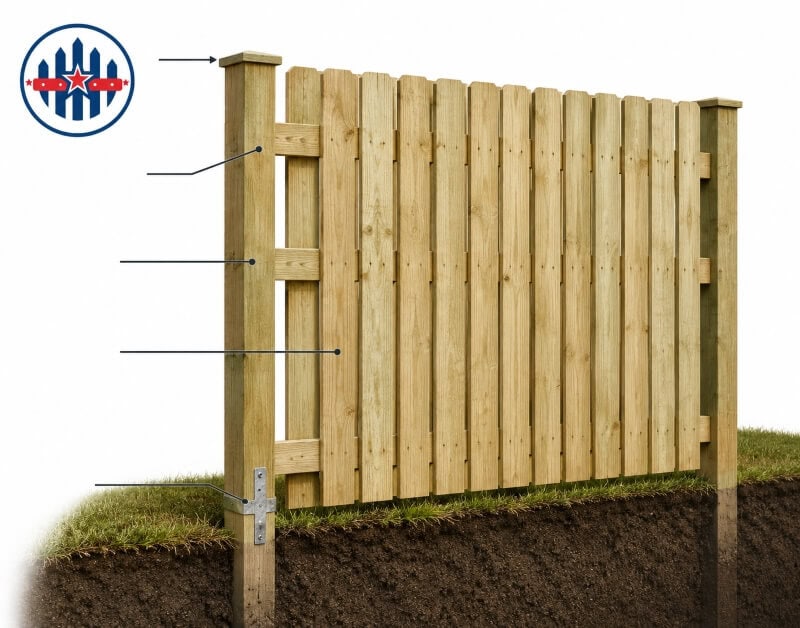
Fence Posts
Timber posts are the backbone of your fence. For standard 1.8m fences, posts are typically 100x100mm or 75x75mm, set at 1.8–2.4m centres. Posts going into the ground must be rated H4 treated pine or hardwood. The quality and correct installation of posts is the single biggest factor in how long your fence lasts.
Fence Rails
Timber rails run horizontally between posts and form the framework that palings are attached to. Standard 1.8m fences typically use two rails; taller fences need three. Common sizes are 75x50mm and 100x50mm.
Fence Palings
Timber palings are the vertical boards that create the actual fence face. They’re available in various widths and profiles — from standard 75mm and 100mm pine palings to wider hardwood options for premium fences. Paling choice significantly affects both the look and cost of your fence.
Fence Sleepers
If your property is sloped, timber sleepers can create retaining walls at the fence base, managing grade changes cleanly and cohesively.
Accessories and Hardware
Timber fence accessories include post caps, post stirrups, nails, screws, brackets, and gate hardware. Don’t underestimate these — quality fixings in stainless steel or hot-dipped galvanised finish prevent rust staining and extend fence life significantly in Queensland’s climate.
Gates
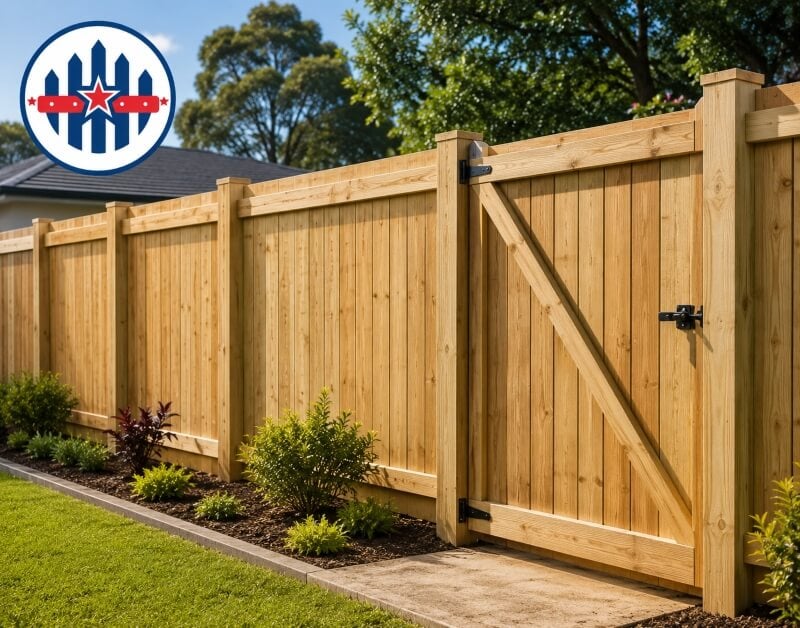
A fence without a quality gate is incomplete. Browse our gate range for timber, pool, and feature gate options to match your fence style.
6. Buyer’s Checklist: What to Consider Before You Buy
Before you order timber fencing materials, work through this checklist to make sure you buy the right products in the right quantities:
Measure and plan:
- Total fence run length (metres)
- Planned fence height (most common: 1.5m, 1.8m, 2.1m)
- Number of gates required (and gate width)
- Terrain profile — is the ground flat or sloped?
Check local rules:
- Brisbane City Council or your local council fence height rules (standard: 1.8m for side/rear; 1.2m for front boundary in many zones)
- Boundary disputes — confirm the fenceline with your neighbour before ordering
- Pool fencing regulations if the fence adjoins a pool area (strict Queensland requirements apply)
Select your materials:
- Paling species (pine vs hardwood) and profile
- Post size and treatment rating (H4 for in-ground)
- Rail size and quantity
- Fixings (stainless steel or hot-dipped galvanised for Queensland conditions)
- Post caps and accessories
Calculate quantities:
- Number of posts = (fence length ÷ post spacing) + 1
- Number of rails = posts – 1 × rails per bay × 2 (one for each side)
- Number of palings = fence length ÷ paling spacing
💡 Pro tip: Always buy 5–10% extra palings to account for cut waste, any defects, and future repairs.
7. How to Maintain a Timber Fence in Brisbane’s Weather
Brisbane’s climate is harder on timber than most Australian cities. High UV, humidity, and summer downpours accelerate weathering if your fence isn’t properly maintained. The good news: basic maintenance is quick and inexpensive.
Annual Maintenance Routine
- Inspect posts and rails for signs of rot, termite activity, or movement. Address any issues early — a loose post becomes a falling fence.
- Clean the fence with a low-pressure wash or scrub to remove mould, mildew, and grime (common in Brisbane’s humid summers).
- Check fixings — re-tighten or replace any nails or screws that have worked loose.
- Replace damaged palings — a broken or rotten paling is a cheap fix if caught early.
Every 2–3 Years
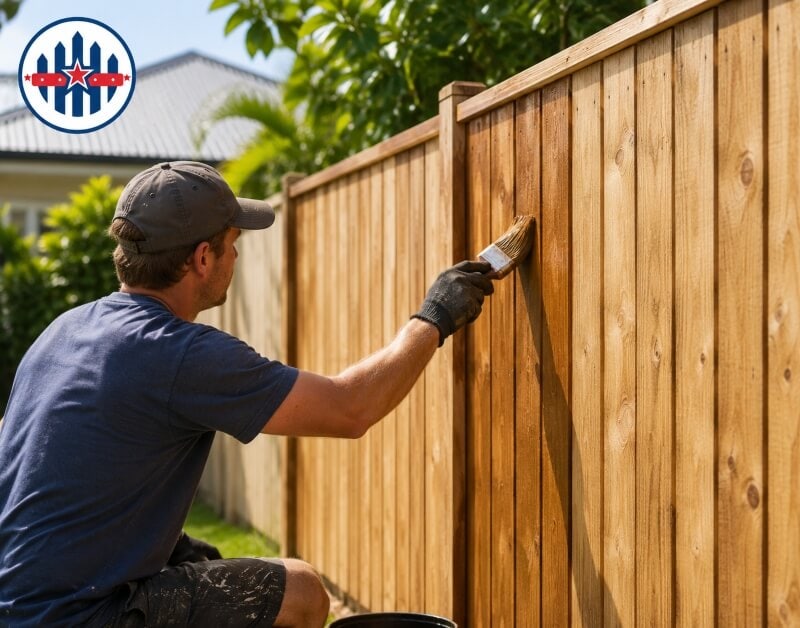
- Re-oil, re-stain, or re-paint — this is the single most important maintenance step for extending fence life. A quality exterior oil or paint system protects timber from UV, moisture, and biological growth. In Brisbane’s conditions, don’t skip this step.
Signs It’s Time to Replace Rather Than Repair
- Posts are rotting at ground level (leaning or wobbling)
- More than 30% of palings are damaged or rotten
- Rails are splitting or breaking at multiple points
If you’re at the “replace” stage, browse our complete timber fencing range to get started.
8. Frequently Asked Questions
Q1. How long does a timber fence last in Queensland?
Ans. A well-built timber fence using H4-treated pine posts and quality hardwood or treated pine palings can last 20–30 years in Queensland conditions with regular maintenance. Hardwood fences can last 30–40+ years. The single biggest factor in lifespan is post quality and treatment — never cut corners on posts.
Q2. What is the best timber for fencing in Brisbane?
Ans. For budget builds: H4-treated pine posts with H3 treated pine rails and palings is the standard and most popular choice. For premium, long-lasting fences: hardwood posts (Ironbark, Spotted Gum) with hardwood palings offer superior durability, natural beauty, and longevity. In all cases, use H4-rated timber for any timber going into the ground.
Q3. Is a timber fence cheaper than COLORBOND?
Ans. Generally yes — timber fencing has a lower upfront material cost per lineal metre than COLORBOND steel. COLORBOND can be more cost-effective over the long term for those who want minimal maintenance, but for those happy to maintain their fence, timber remains more affordable overall when combining purchase price, installation, and repair costs.
Q4. Do I need council approval to build a fence in Brisbane?
Ans. For most standard residential fences under 2m in Brisbane, a development approval is not required. However, rules vary by fence height, location (front vs. side/rear boundary), heritage overlays, and flood or bushfire zones. Always check with Brisbane City Council or your relevant local council before commencing. Dividing fences between neighbours are also subject to Queensland’s Neighbourhood Disputes (Dividing Fences and Trees) Act 2011.
Q4. Can I build a timber fence myself (DIY)?
Ans. Yes — timber is the most DIY-friendly fencing material available. It requires standard tools (circular saw, drill, post hole digger or auger) and basic carpentry skills. The biggest challenge for DIY is setting posts correctly — they need to be plumb, at consistent height, and correctly concreted in. Getting this right ensures your fence is straight, strong, and long-lasting.
Q5. How do I stop my timber fence from rotting in Queensland?
Ans. Key prevention steps include: using H4-treated pine or hardwood for all in-ground posts, using post stirrups to keep timber off the ground where possible, ensuring adequate drainage away from fence posts, painting or oiling above-ground timber every 2–3 years, and doing annual inspections to catch early rot before it spreads.
Q6. What height should a timber fence be?
Ans. The most common residential fence height in Queensland is 1.8 metres for side and rear boundaries — this provides good privacy and is within permitted development thresholds for most council areas. Front boundary fences are typically lower, often 1.0–1.2m. Check your local council rules before deciding, especially if your property is in a heritage overlay area.
Q7. Can I attach a gate to a timber fence?
Ans. Absolutely — timber gates are a natural and popular pairing with timber fences. Whether you need a standard pedestrian gate, a wide driveway gate, or a gate adjoining a pool fence, browse our gate range for compatible options. Make sure gate posts are larger and more deeply set than standard fence posts, as they bear significantly more load.
Q10. How many palings and rails do I need for my fence?
Ans. For a standard 1.8m fence using 100mm palings with a 10mm gap at 1.8m post spacing, you’ll need approximately 16–17 palings per bay. Two rails per bay is standard for 1.8m fences; three rails for fences over 1.8m. Always add 5–10% to your paling count for cut waste and future repairs.
Q11. What accessories do I need for a timber fence?
Ans. Beyond posts, rails, and palings, a quality timber fence needs: post caps (to prevent water ingress), galvanised or stainless steel nails/screws (for corrosion resistance), post stirrups if keeping timber off the ground, gate hinges and latches, and concrete for post setting. Browse our timber fence accessories range for everything you need.
9. Shop Timber Fencing Supplies at Top Class Fences
Top Class Fences is your Brisbane and Queensland source for quality timber fencing supplies — whether you’re a tradie building hundreds of metres or a homeowner tackling a weekend project.
Browse our full range:
- All Timber Fencing Products
- Timber Palings
- Timber Posts
- Timber Rails
- Timber Sleepers
- Timber Fence Accessories
- Gates
Not sure if timber is right for your project? Also explore:
- COLORBOND Fencing — for low-maintenance steel fencing
- Pool Fencing — for compliant pool surrounds
- Security Fencing — for high-security boundary applications
Have questions about what to buy? Contact our team — we’re Brisbane locals who know Queensland fencing conditions inside out.
Related guides
Considering a timber fence? See the best timber for fencing and how much timber fencing costs.